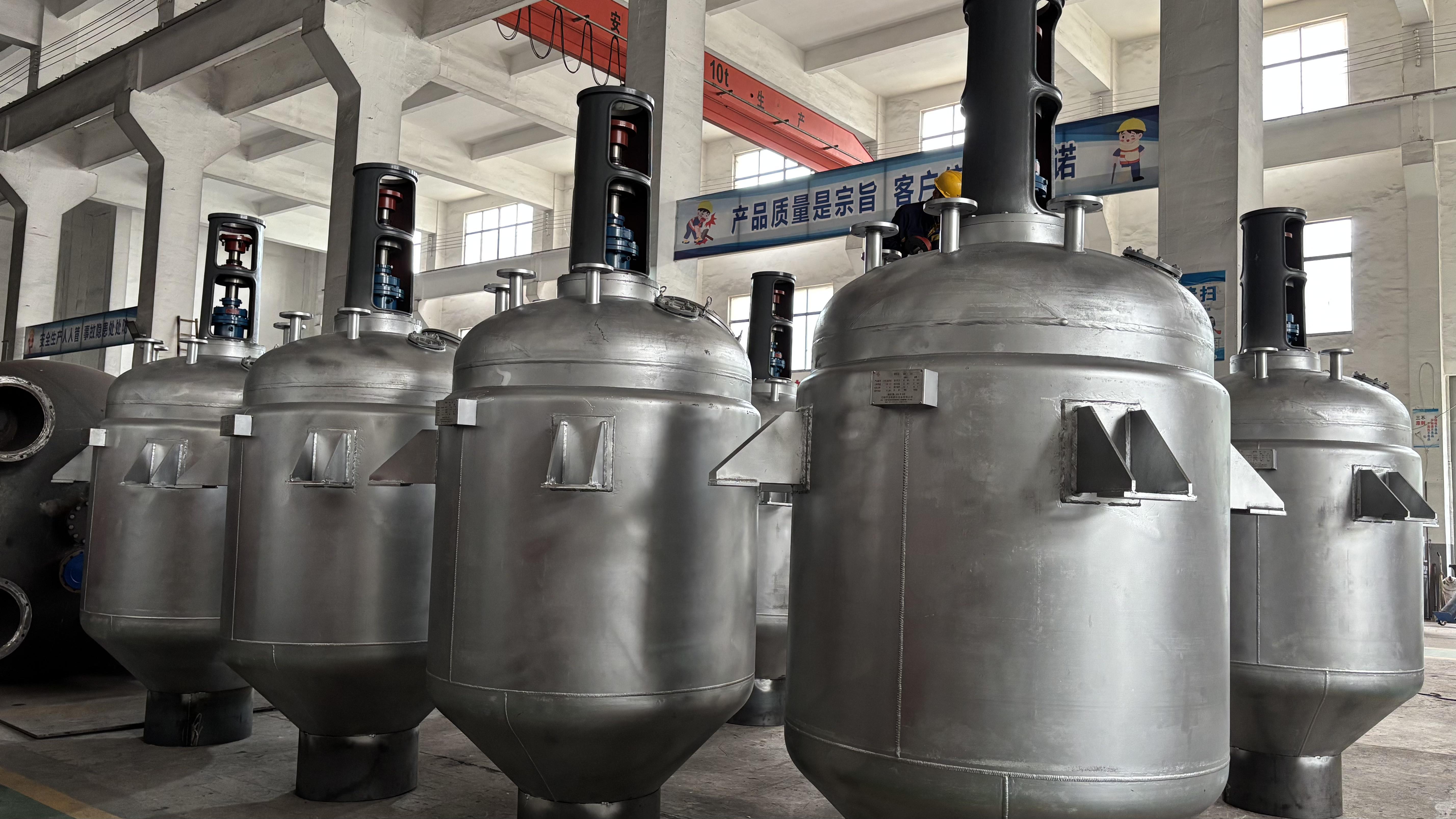
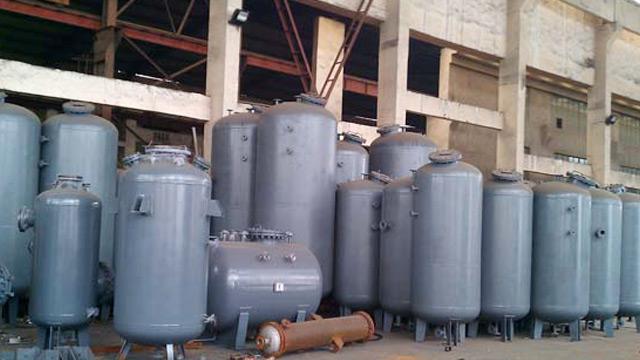
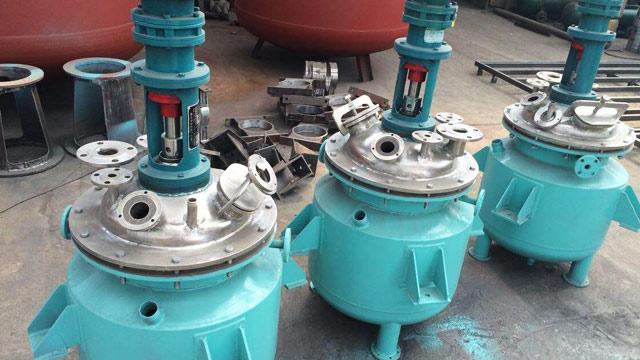
As core equipment in chemical, pharmaceutical, and food processing industries, reaction vessels are essential containers for facilitating controlled chemical reactions. Their working principle centers on providing a stable conversion environment for reactants through precise control of temperature, pressure, and stirring speed.
Material Mixing: Raw materials are proportionally fed into the kettle, and the agitation system ensures uniform material distribution.
Thermal Control: The outer jacket or internal coils circulate heating media (e.g., steam, thermal oil) or cooling media (e.g., chilled water) to maintain ideal reaction temperatures.
Pressure Maintenance: Advanced sealing systems ensure safe operation under specific positive or negative pressure conditions.
A standard industrial reaction vessel consists of 5 main assemblies:
Kettle Body & Jacket: Built from high-grade stainless steel or special alloys to withstand internal pressure and corrosion.
Agitation & Drive System: Motor, gearbox, and custom impellers (anchor, turbine, or helical ribbon).
Sealing Device: Mechanical seals or magnetic couplings for zero-leakage performance.
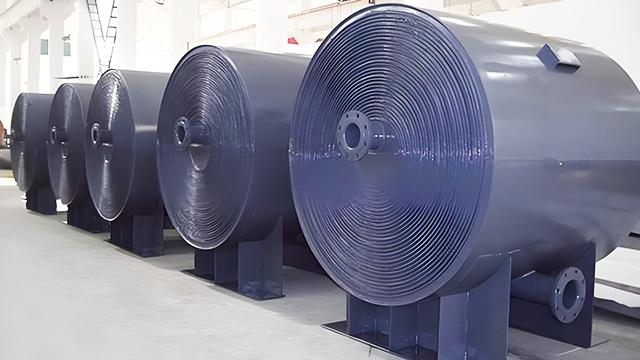
Heat Transfer System: Jacket / Half-pipe coils / Internal cooling coils.
Control & Safety Outlets: Temperature sensors, pressure relief valves, and burst discs.
Need a customized reaction vessel engineered for your specific chemical process?Contact Wuxi Hongtu’s Engineering Teamtoday for technical support and a quick quote!
2026/06/01
2021/06/16
2026/02/28
2026/06/22
2026/07/01